Situational Awareness in the Markets: What Fighter Pilots Can Teach Us About Surviving Volatility
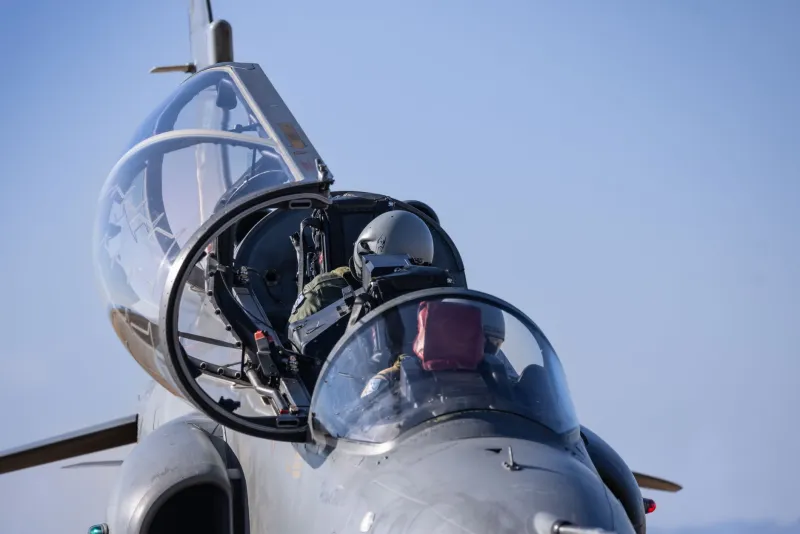
In the cockpit of an F-16 traveling at 1,500 miles per hour, the margin between a controlled maneuver and catastrophic failure is measured in fractions of a second. Elite military aviators don't rely on luck. They rely on doctrine, preparation, and an almost preternatural ability to read their environment before threats materialize. For investors navigating a market environment defined by interest rate uncertainty, geopolitical disruption, and rapid sector rotations, those same disciplines are not merely instructive — they are essential.
At Starfox Financial, we believe that the most durable investment strategies are built not just on opportunity identification, but on rigorous risk architecture. The fighter pilot's approach to aerial combat offers a surprisingly precise framework for that architecture.
The OODA Loop: Your Market Decision Cycle
Colonel John Boyd, a United States Air Force strategist, developed what became known as the OODA Loop — Observe, Orient, Decide, Act. Originally designed to explain how fighter pilots outmaneuver opponents in close-range engagements, the framework has since been adopted by military planners, business strategists, and increasingly, professional traders.
The principle is straightforward: the combatant who cycles through this loop faster than their adversary gains a decisive advantage. In market terms, this translates to a disciplined process of continuous monitoring, contextual interpretation, decisive positioning, and timely execution — before the broader crowd reaches the same conclusion.
Consider how this applies to a market correction. An investor operating with a compressed OODA Loop does not wait for CNBC to confirm a trend reversal. They observe early warning signals — deteriorating breadth, rising credit spreads, abnormal options flow — orient those signals within the broader macro context, decide on a defensive posture, and act before the selling becomes disorderly.
Altitude Is Everything: The Role of Capital Reserves
In aerial combat doctrine, altitude represents potential energy. A pilot who maintains altitude holds options — the ability to dive, accelerate, or disengage. A pilot who burns altitude chasing a target surrenders those options and becomes vulnerable.
For investors, cash and liquid reserves function as altitude. Fully deploying capital in a late-cycle bull market may feel productive, but it eliminates maneuverability precisely when maneuverability matters most. Professional portfolio managers frequently maintain a tactical cash allocation — not out of timidity, but out of strategic discipline — preserving the capacity to acquire quality assets at distressed prices when corrections arrive.
This is not an endorsement of market timing in its most speculative form. Rather, it is a recognition that liquidity management is itself a form of risk control, one that many retail investors overlook until it is too late to act.
Threat Assessment: Knowing Your Six O'Clock
In fighter pilot parlance, your "six o'clock" refers to the blind spot directly behind you — the most dangerous position from which an adversary can approach undetected. Every experienced pilot maintains an active awareness of what they cannot directly see.
Portfolio investors carry analogous blind spots. Concentration risk — excessive exposure to a single sector, asset class, or correlated group of holdings — frequently goes unexamined until a market shock reveals it. An investor who believes they are diversified across fifteen technology stocks may discover, during a rate-driven sector selloff, that their apparent diversification was largely illusory.
Periodic correlation analysis is the financial equivalent of checking your six. By examining how holdings move in relation to one another under stress conditions — not merely under normal market conditions — investors can identify hidden concentrations and rebalance before those concentrations become liabilities.
Controlled Rolls: The Art of the Strategic Pivot
A barrel roll in aerial combat is not an evasive maneuver in the conventional sense. It is a calculated repositioning that transforms an adversary's offensive energy into a defensive liability. The pilot does not flee — they redirect.
In portfolio management, the equivalent is the tactical sector rotation. When macroeconomic conditions shift — when the yield curve flattens, when inflation accelerates, when consumer confidence deteriorates — a rigid, static allocation becomes a liability. The investor who can rotate from growth-sensitive positions into defensive sectors such as utilities, consumer staples, or healthcare without abandoning their long-term framework is executing the financial equivalent of a barrel roll.
This requires preparation. Sector rotation strategies should be identified and partially structured in advance, so that execution under pressure is methodical rather than reactive.
Ejection Protocols: Defining Your Stop-Loss Architecture
Every military aircraft is equipped with an ejection system — a mechanism of last resort that preserves the pilot when the aircraft cannot be saved. The decision to eject is not made in the moment of crisis. It is pre-determined, governed by clear thresholds, and executed without hesitation when those thresholds are crossed.
Stop-loss discipline operates on precisely this principle. Establishing clear exit thresholds before entering a position — and honoring those thresholds regardless of emotional attachment — is among the most underutilized tools in the retail investor's toolkit. The reluctance to realize a loss frequently transforms manageable drawdowns into portfolio-threatening declines.
Professional traders do not view stop-losses as admissions of failure. They view them as pre-negotiated agreements with reality — acknowledgments that no single position is worth the structural integrity of the broader portfolio.
Flying in Formation: Correlation and Portfolio Cohesion
Formation flying demands that each aircraft maintain precise spatial awareness of every other element in the group. A single miscalculation can cascade into a catastrophic chain reaction. The strength of the formation depends on the discipline of each individual component.
A well-constructed portfolio operates on a similar logic. Each position should be evaluated not only on its individual merit, but on its relationship to the portfolio as a whole — its contribution to overall volatility, its behavior during drawdown periods, and its correlation to other holdings across different market regimes.
This is the discipline of portfolio construction as opposed to stock picking. The former considers systemic coherence. The latter considers individual opportunity. Both matter, but the former is the more sophisticated and ultimately more protective endeavor.
The Mission Debrief: Post-Trade Review as a Discipline
After every combat mission, military aviators conduct a rigorous debrief — a structured review of every decision, every maneuver, and every outcome, regardless of whether the mission succeeded or failed. The purpose is not accountability in a punitive sense. It is continuous improvement through honest assessment.
Investors who maintain trading journals and conduct systematic post-trade reviews develop a compounding advantage over time. Patterns in decision-making — the tendency to hold losers too long, to add to losing positions, to abandon sound strategies during short-term volatility — become visible only through structured retrospection. Addressing those patterns is the work that separates durable investors from those who repeat costly mistakes across market cycles.
At Starfox Financial, we view risk management not as a constraint on returns, but as the foundation upon which sustainable returns are built. The fighter pilot does not survive by being reckless. They survive — and ultimately prevail — by combining courage with precision, aggression with discipline, and speed with situational clarity. These are qualities every serious investor should aspire to cultivate.