The Emotional Tax: How Psychological Biases Quietly Drain Your Portfolio Returns
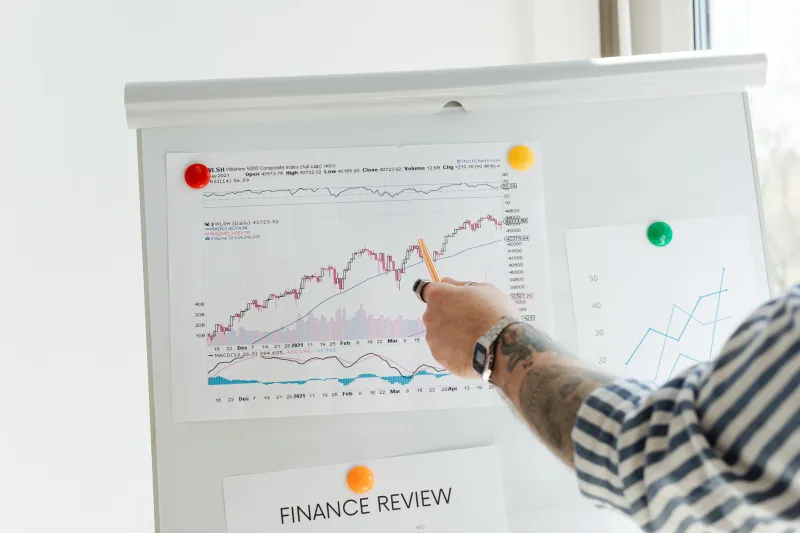
Every investor knows the feeling — the stomach-dropping panic of a red market open, the urge to act, to do something. What most investors never calculate is the precise dollar cost of those emotional impulses. Understanding the behavioral traps embedded in human psychology may be the single most undervalued edge in modern investing.
Research from DALBAR's annual Quantitative Analysis of Investor Behavior consistently demonstrates that the average equity fund investor significantly underperforms the S&P 500 over rolling 20-year periods — not because of poor fund selection, but because of poor timing decisions driven by emotion. The gap between what the market offers and what the average investor actually captures has historically exceeded three percentage points annually. Over decades, that differential is not a rounding error. It is a retirement.
The Anatomy of a Bad Trade
Behavioral finance, the discipline that bridges psychology and economics, identifies several recurring patterns that erode investor returns. These are not fringe behaviors limited to novice traders. They manifest across experience levels, account sizes, and market conditions.
Panic selling is perhaps the most costly. During the March 2020 COVID-19 market selloff, the S&P 500 fell approximately 34% in 33 days. Investors who liquidated positions at the trough locked in those losses permanently. Those who held — or better yet, added exposure — participated in one of the fastest recoveries in market history, with the index reclaiming its highs within six months. The investors who sold did not protect themselves. They simply converted temporary paper losses into permanent capital destruction.
Revenge trading operates differently but is equally destructive. After absorbing a loss, some investors feel a compulsive need to recover that capital quickly, often by increasing position sizes, concentrating in volatile instruments, or abandoning a structured process entirely. This mirrors the behavior of a gambler doubling down after a losing hand — the emotional need to "get even" overrides rational risk assessment. Markets, unlike poker tables, do not owe any participant a recovery.
Overconfidence bias tends to emerge during bull markets. A sustained period of gains can cause investors to attribute returns to personal skill rather than favorable conditions. This leads to under-hedging, excessive leverage, and the gradual abandonment of diversification principles. The 2021 speculative frenzy in meme stocks and certain cryptocurrency assets illustrated this dynamic at a societal scale. Many retail participants who entered those trades believing they possessed superior information or timing ability suffered severe losses when sentiment reversed.
The Discipline Framework: Managing the Mind Before Managing the Money
The practical antidote to emotional trading is not the elimination of emotion — that is neither achievable nor desirable. Emotion carries information. Fear in a deteriorating market may be an appropriate signal to review position sizing. Enthusiasm about an emerging sector may reflect genuine research. The goal is the construction of a decision-making framework that interposes structure between the emotional signal and the market action.
Define rules before the market opens. A written investment policy statement — even a simple one — forces investors to articulate their objectives, time horizon, risk tolerance, and rebalancing criteria in a calm, deliberate state. When volatility arrives, that document becomes an anchor against reactive decision-making. Institutional investors have long operated this way. Individual investors who adopt the same discipline gain a meaningful structural advantage.
Implement a mandatory waiting period. Any impulse trade — whether driven by fear or excitement — benefits from a 24 to 48-hour delay. This is not indecision; it is process. Markets move continuously. An opportunity that disappears in 48 hours was likely not the calculated investment thesis it felt like in the moment.
Quantify the cost of inaction versus action. Before executing any emotionally-motivated trade, model the outcome of simply doing nothing. In most cases, the base case of holding a diversified portfolio and allowing time to work is the highest-probability path to long-term wealth. The burden of proof should fall on the action, not the inaction.
Review performance in aggregate, not in real time. Checking a portfolio multiple times per day does not improve returns — it amplifies emotional noise. Studies in behavioral economics suggest that the more frequently investors observe their portfolios, the more loss aversion they experience, and the more likely they are to make suboptimal changes. Quarterly reviews, aligned with a structured rebalancing calendar, tend to produce better outcomes than daily monitoring.
The Compounding Cost of Emotional Decisions
Consider two investors, each starting with $250,000 at age 40. The first investor maintains a disciplined, fully-invested approach through market cycles, capturing an average annual return of 9%. The second investor, prone to emotional exits and re-entries, sacrifices just 2.5 percentage points annually due to mistimed decisions, achieving an effective return of 6.5%.
At age 65, the disciplined investor's portfolio has grown to approximately $2.16 million. The emotionally reactive investor's portfolio reaches roughly $1.24 million. The difference — nearly $920,000 — was never lost to a single catastrophic trade. It was drained steadily, invisibly, through the compounding cost of behavioral friction.
This is the emotional tax. It appears on no brokerage statement. It triggers no trade confirmation. Yet it is among the most significant financial drains any investor can face.
Building Psychological Resilience as a Core Investment Competency
The most sophisticated portfolio construction in the world provides limited benefit if the investor abandons it under pressure. Psychological resilience — the capacity to maintain a structured approach when conditions are uncomfortable — is therefore not a soft skill. It is a core investment competency, as important as understanding valuation metrics or asset correlation.
This resilience is cultivated through preparation, not willpower. Investors who have stress-tested their portfolios mentally, who understand the historical frequency and duration of drawdowns, and who have pre-committed to a response plan are far less likely to make costly reactive decisions. They have, in effect, already made the hard decision before the pressure arrived.
At Starfox Financial, we believe that navigating markets successfully requires as much mastery of the internal environment as the external one. The charts, the data, and the analysis matter — but the investor sitting behind the screen matters more.