Consensus Traps: Why the Market's Most Popular Signals Often Fire at the Worst Possible Moment

There is a certain comfort in agreement. When financial media, social platforms, and brokerage newsletters all point in the same direction, the instinct to follow feels rational. After all, if thousands of analysts and millions of investors are drawing the same conclusion, how wrong can it be?
Quite wrong, as it turns out—and often at the precise moment confidence is highest.
The phenomenon is neither new nor mysterious. It is a structural feature of how markets process and distribute information. Understanding it is not merely an academic exercise. For US investors navigating today's noise-saturated financial environment, recognizing the mechanics of consensus-driven traps could be the difference between positioning ahead of a trend and absorbing its aftermath.
How Signals Become Stale Before They Spread
Market signals do not travel instantaneously. A genuine shift in economic fundamentals—a deterioration in credit conditions, a change in industrial output, a subtle rotation in institutional equity positioning—registers first in the behavior of sophisticated, data-rich participants. Hedge funds, proprietary trading desks, and large asset managers act on these signals weeks or months before they surface in the indicators that retail investors typically monitor.
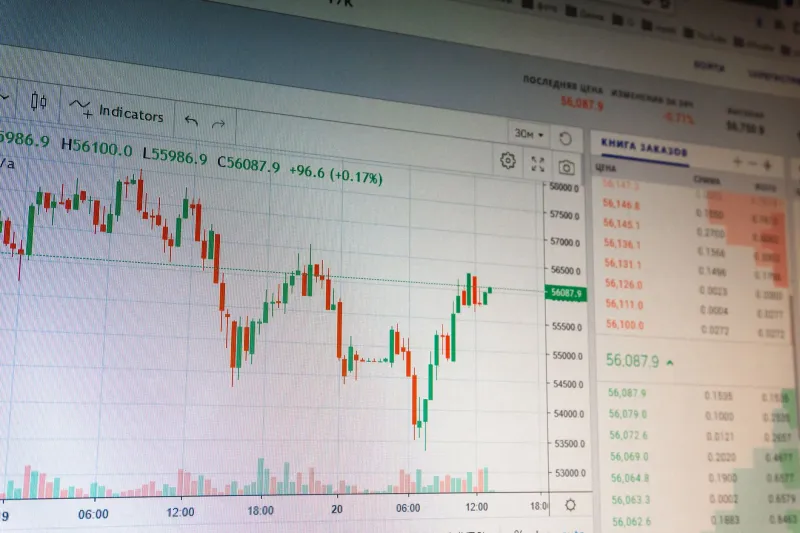
By the time a trend appears on widely followed technical charts, gets cited in mainstream financial publications, or generates a surge in social media commentary, the early-stage trade is largely complete. The price has already moved to reflect the informed consensus. What remains is the uninformed consensus—retail capital flooding into a position that institutional money may already be trimming.
This lag is not accidental. It is an inherent property of how information cascades through markets. Data must be collected, analyzed, published, discussed, and finally acted upon by the broader public. Each step introduces delay. Each delay represents a window during which early movers extract value at the expense of late arrivals.
The Anatomy of a Consensus Trade Gone Wrong
Consider the pattern that played out repeatedly during the post-2020 market cycle. As inflation data climbed, consensus quickly formed around commodity exposure and energy equities. By the time the trade became a mainstream recommendation—appearing in retail-facing newsletters and generating record inflows into sector ETFs—energy stocks had already priced in several quarters of elevated earnings expectations. Late entrants bought near cyclical peaks.
Similarly, when the Federal Reserve's rate-hiking cycle became a consensus narrative, retail investors rotated heavily into short-duration fixed income and cash equivalents. The move was directionally sound but tactically late. Much of the yield advantage had already been captured by institutional participants who repositioned during the early signaling phase, well before the Fed's intentions were widely telegraphed.
This is the consensus trap in its clearest form: a correct thesis, executed at the wrong time, because the signal was consumed rather than anticipated.
Reading Sentiment as a Contrarian Instrument
The most reliable use of consensus indicators is not to follow them—it is to treat extreme readings as potential inflection warnings. When a signal achieves near-universal agreement, its predictive value for future returns often inverts.
The American Association of Individual Investors (AAII) Sentiment Survey is a useful illustration. Historically, periods of extreme bearish sentiment among retail investors have preceded above-average forward returns in US equities. Conversely, extreme bullish readings have tended to cluster near short-term market peaks. The crowd is not always wrong, but it is systematically late—and its extremes mark the moments when the narrative has been fully priced.
Sophisticated investors study these readings not as directional guides but as risk gauges. An overwhelming bullish consensus signals that marginal buyers are running thin. An overwhelming bearish consensus may indicate that selling pressure is nearing exhaustion.
Distinguishing Real Directional Shifts From Noise
Not every contrarian impulse is profitable. The challenge lies in separating genuine trend reversals from temporary sentiment distortions. Several diagnostic questions can help:
Is the signal accompanied by fundamental confirmation? A sentiment extreme carries more weight when paired with deteriorating or improving economic data—not simply with a price move that has attracted narrative coverage.
Where is institutional positioning? Commitments of Traders (COT) reports and 13-F filings, while imperfect and delayed, offer partial visibility into how large capital allocators are positioned. Significant divergence between institutional and retail positioning is worth examining carefully.
Is the consensus self-reinforcing or self-limiting? Some trends generate their own momentum—momentum strategies, index rebalancing, and passive flows can extend moves beyond fundamental justification. Others burn out quickly when the marginal buyer is exhausted. Understanding the capital structure behind a trend matters as much as the trend itself.
How saturated is the media coverage? When a trade appears on the cover of mainstream financial publications or dominates retail investor forums, the information has reached maximum distribution. This is rarely the moment of maximum opportunity.
Navigating Without the Crowd's Map
Independent market navigation requires building an analytical framework that does not depend on consensus validation. This does not mean reflexive contrarianism—simply disagreeing with the majority is not a strategy. It means developing the discipline to evaluate signals based on their source, their timing, and their underlying mechanics rather than their popularity.
For long-term US investors, this translates into a few practical disciplines. First, establish your own watchlist of leading indicators—data points that tend to precede mainstream narratives rather than follow them. Second, treat surges in media coverage of any particular trade as a prompt for re-evaluation rather than confirmation. Third, build position-sizing rules that account for the stage of a trend's public visibility, reducing exposure as consensus broadens.
The market rewards those who read the map before it is distributed to everyone else. Following the crowd's directions is not navigation—it is arrival after the destination has already changed.