Price vs. Reality: A Disciplined Investor's Guide to Profiting From Market Dislocations
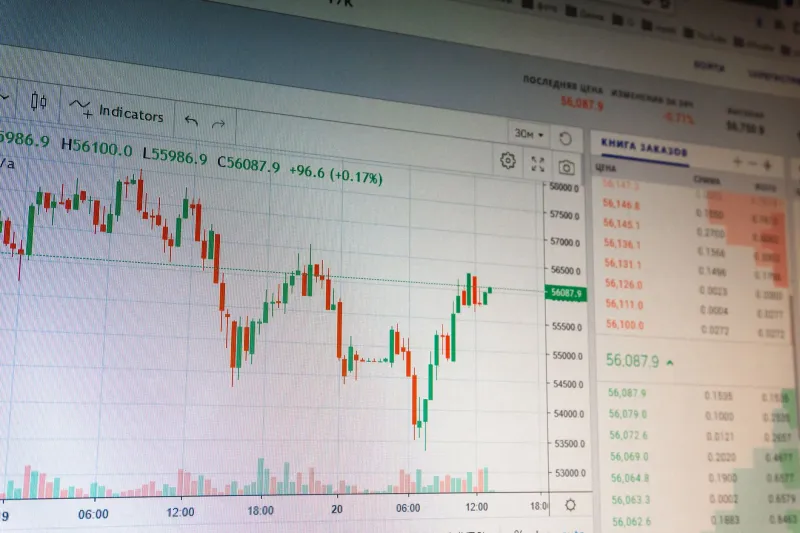
Markets are not always rational. Despite decades of efficient market hypothesis debates in academic circles, any practitioner who has navigated multiple economic cycles understands that prices and intrinsic value can diverge—sometimes spectacularly. These divergences, known as market dislocations, represent some of the rarest and most consequential opportunities available to investors who are prepared to act with both conviction and caution.
The challenge is not merely identifying when a dislocation exists. The greater test is determining whether the price gap reflects a genuine mispricing or whether the market is pricing in information the observer has not yet internalized.
What a Market Dislocation Actually Looks Like
A market dislocation occurs when the price of an asset moves significantly away from its fundamental value due to forces that are temporary, technical, or behavioral rather than structural. These forces can include forced selling by institutional investors facing margin calls, panic-driven retail outflows, liquidity crises that compress valuations across entire asset classes, or regulatory shocks that create short-term uncertainty without altering long-term earnings power.
The 2008 financial crisis produced dislocations across virtually every asset class simultaneously. Investment-grade corporate bonds—securities backed by profitable, solvent companies—traded at yields implying default rates that were economically implausible. Similarly, during the March 2020 COVID-19 sell-off, high-quality municipal bonds briefly traded at yields exceeding those of equivalent-duration Treasuries, an inversion that had no fundamental justification and corrected within weeks.
Commodities are equally susceptible. In April 2020, the May futures contract for West Texas Intermediate crude oil briefly traded at negative prices—a mechanical anomaly driven by storage constraints and contract expiration mechanics rather than any reasonable assessment of oil's long-term value.
Each of these examples shares a common thread: a temporary, identifiable force drove prices away from reality, and the correction, when it came, was swift.
The Framework for Identifying Genuine Dislocations
Not every declining asset represents a dislocation. Distinguishing a mispriced asset from a structurally impaired one requires a systematic approach.
Step one: Anchor to intrinsic value. Before assessing whether a price is dislocated, an investor must have a defensible estimate of what the asset is actually worth. For equities, this involves discounted cash flow analysis, comparable company multiples, and balance sheet evaluation. For bonds, it means assessing credit quality relative to prevailing spreads. Without an anchor, identifying a dislocation is impossible—the investor is simply guessing.
Step two: Identify the dislocating force. Ask what is causing the price divergence. Is it a forced seller—a hedge fund unwinding a position, an ETF experiencing redemption pressure, a pension fund rebalancing? Is it a liquidity event that is compressing prices across an entire sector regardless of individual fundamentals? Or is it genuine bad news that the market is correctly pricing in? The nature of the dislocating force determines whether the gap will close and how quickly.
Step three: Assess the reversion catalyst. A dislocation without a plausible reversion mechanism is simply a cheap asset that may stay cheap indefinitely. Identify what will cause prices to normalize—a liquidity injection from the Federal Reserve, an earnings release that resets expectations, the expiration of a regulatory uncertainty, or simply the passage of time as forced sellers exhaust their positions.
Step four: Size the position accordingly. Dislocations attract capital precisely because the reward can be asymmetric. But the same forces creating the opportunity can also extend it far beyond what any model predicts. Position sizing must account for the possibility that prices remain dislocated longer than the investor's capital or patience allows.
The Falling Knife Problem
The most common mistake investors make when attempting to exploit dislocations is confusing a declining price with a dislocated one. A stock that has fallen 40% is not automatically cheap. It may simply be 40% closer to its fair value—or still overvalued.
The falling knife problem is particularly acute in sectors experiencing genuine structural disruption. Retail real estate investment trusts, for example, saw valuations compress sharply between 2017 and 2020. Some investors interpreted this as a dislocation and bought aggressively. In certain cases, they were correct. In others, the price decline reflected a legitimate reassessment of the sector's long-term cash flow potential in the face of e-commerce displacement.
The antidote is intellectual honesty. Before concluding that a price is wrong, an investor must genuinely engage with the bear case. What would have to be true for the current price to be correct? If the answer requires assumptions that are economically implausible—such as a solvent company defaulting on its debt or a commodity trading at zero indefinitely—then the dislocation thesis has merit. If the bear case is coherent and grounded in observable trends, caution is warranted.
Practical Positioning Strategies
For investors who have identified a credible dislocation, several positioning approaches can balance opportunity capture with downside protection.
Staged entry involves building a position incrementally rather than deploying capital all at once. This approach acknowledges the uncertainty around timing while ensuring participation if the reversion occurs sooner than anticipated.
Pair trades can isolate the dislocation while hedging broader market risk. If a specific sector is dislocated relative to the broader index, an investor can go long the dislocated sector while shorting the index, reducing exposure to overall market direction and focusing the return profile on the convergence trade itself.
Options structures offer another avenue, particularly when implied volatility is elevated during dislocations. Selling puts on a dislocated asset at a strike price representing deep value can generate premium income while establishing a willingness to own the asset at an even more attractive price.
Patience as a Competitive Advantage
Markets do not correct dislocations on a schedule. The investor who identified the value in investment-grade bonds in late 2008 still had to endure months of further price pressure before the thesis resolved. During that period, the psychological pressure to abandon a correct but painful position was immense.
This is where the disciplined, long-horizon investor holds a structural edge over institutional players constrained by quarterly performance benchmarks and investor redemption risk. The ability to hold a well-reasoned position through a period of extended dislocation—because the analysis remains intact even as the price moves adversely—is a genuine competitive advantage that individual investors and patient family offices possess over many institutional counterparts.
Market dislocations are, by definition, temporary. Prices that have strayed too far from reality carry within them the gravitational pull of reversion. The investor who can identify the gap, understand the force creating it, and hold a sized position through the noise stands to capture returns that ordinary market participation rarely provides.